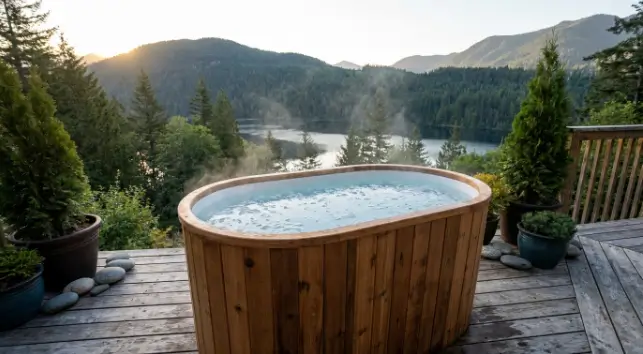
For two people plunging every day, three setups come up most often: a rectangular acrylic tub with a shared chiller, a mains-fed continuous-flow trough that skips the chiller, and two separate single-person barrel tubs. The shared acrylic tub is the best all-around fit for most households, balancing equipment cost against daily convenience. Continuous-flow only makes sense where water is cheap and unlimited. Two single tubs suit households whose plunge schedules genuinely don’t overlap.
Option One: A Shared Rectangular Tub With One Chiller
A rectangular acrylic or stainless tub built for two, usually 150 to 220 gallons, paired with a single chiller rated around one horsepower or higher, is the setup most households land on after comparing alternatives. One chiller and one filtration system means one thing to maintain instead of two, and dual bench seating lets both people plunge back to back without a long recovery wait between sessions. The chiller needs to recover temperature fast enough to handle person two arriving right after person one, so undersizing it for daily double use is the most common mistake with this setup. Installed cost typically runs $4,500 to $8,000 depending on materials and filtration package.
Option Two: Mains-Fed Continuous Flow, No Chiller
A continuous-flow setup runs incoming water through the tub and out to a drain rather than chilling and recirculating a fixed volume. It skips the chiller and its maintenance entirely, and water quality stays high because it’s constantly replaced rather than filtered and reused. The catch is water use: a trough running steadily for two daily plungers can go through hundreds of gallons a day, which only pencils out where water is inexpensive and a household isn’t on a metered or drought-restricted supply. Water temperature also depends entirely on the source, so this setup works best in regions where groundwater or municipal supply already runs cold enough without mechanical help, generally under 60 degrees at the tap.
Option Three: Two Single-Person Barrel Tubs on Separate Schedules
Two smaller barrel-style tubs, each in the 60 to 100 gallon range, make sense when two people plunge at genuinely different times, such as one person at 5 a.m. and the other after work. Each person gets full control over their own temperature and schedule without waiting on the other. The tradeoff is doubled equipment: two chillers, two filtration systems, two sets of consumables, and two things that can need a repair call in the same month. Combined cost for two single tubs with proper chillers often lands close to or above the price of one shared two-person unit, once both chillers are counted, without gaining the convenience of simultaneous use.
Comparing Running Costs Across All Three
The shared tub’s single chiller running daily typically draws enough electricity to add somewhere around $20 to $40 a month to a utility bill, depending on ambient temperature and how well the tub is insulated. The continuous-flow option has no chiller electricity cost but a water bill that can run considerably higher depending on local rates and how many gallons flow through per session. Two single tubs roughly double the shared tub’s electricity cost since two chillers are running independently rather than one unit serving both people. None of the three options is dramatically cheaper once total cost, not just the sticker price, gets compared side by side; checking a couple of specific tub and chiller pairings against real numbers, such as the two-person tub and chiller specs the team at SweatDecks lists on their product pages, is a reasonable way to sanity-check the estimates above before ordering anything.
Filtration Needs When Two People Use One Tub Daily
A shared tub used daily by two people carries roughly double the body oils, sweat, and skin cells of single occasional use, and filtration has to be sized for that from the start rather than upgraded later after the water turns cloudy. An ozone generator or UV-C system paired with an adequately sized cartridge or sand filter, plus a sanitizer held at the correct level, keeps a shared daily-use tub usable for three to four months between full water changes. Skipping proper filtration to save money upfront is the most common reason two-person daily setups end up needing a full drain and refill every few weeks instead.
Footprint and Delivery Considerations for Each Setup
A rectangular two-person tub needs meaningfully more deck or patio space than a single barrel, plus room for the chiller alongside it, and the surface underneath needs to be level and rated to hold well over a thousand pounds once filled. A continuous-flow trough needs a drain line run to it in addition to a water supply, which is a plumbing job most single-tub setups don’t require. Two barrel tubs actually spread footprint demands out, which can be an advantage on an oddly shaped patio where one large rectangular tub wouldn’t fit cleanly. Measuring the delivery path, not just the final resting spot, matters for all three options, since a crated tub that size has to clear gates, stairs, and hallway turns to get there.
What the Research Says About Daily Cold Plunging Itself
None of these three setups changes what daily cold-water immersion actually does physiologically, and the evidence is worth knowing regardless of which configuration you land on. A 2025 meta-analysis in PLoS One found cold-water immersion associated with a range of wellbeing and recovery benefits across pooled trials, and a 2023 meta-analysis in Frontiers in Physiology reported an association between post-exercise cold-water immersion and reduced fatigue. A Cochrane review found a modest reduction in next-day muscle soreness from cold-water immersion, though it noted the underlying evidence is limited and mixed, and other research has found immersion soon after resistance training can dull strength and hypertrophy gains. Two people sharing a daily habit is worth planning around that nuance, particularly if either person also lifts weights and cares about strength progress.
Which Setup Actually Fits a Daily Two-Person Household
For most households, the shared rectangular tub with one properly sized chiller is the setup to build around: one system to maintain, simultaneous use, and a total cost that’s competitive with the alternatives once everything is counted. Continuous-flow is worth a serious look only where water is cheap and cold at the tap already. Two single tubs earn their keep specifically when schedules don’t overlap, not as a default cheaper option, since doubled equipment usually erases whatever was saved on the smaller units.
Frequently Asked Questions
What is the best cold plunge configuration for two people who plunge daily?
For most households, a rectangular acrylic tub with a shared chiller and a dual-bench layout hits the best balance of upfront cost, running cost, and daily convenience. Continuous-flow works with cheap unlimited water, and two single tubs suit very different schedules.
Does a continuous-flow cold plunge need a chiller at all?
Not always. A mains-fed, drain-to-waste setup relies on incoming water temperature rather than mechanical cooling, skipping the chiller in most climates, though it uses far more water per day.
How many gallons does a two-person tub typically hold?
Most rectangular two-person tubs hold 150 to 220 gallons. Two single-person barrel tubs together typically total 120 to 200 gallons.
Is a stainless steel tub worth the extra cost over acrylic for daily two-person use?
Stainless steel resists scratching and holds up well to constant daily use, worth the premium for households expecting a decade or more of service. Acrylic costs less and is durable for a shorter equipment cycle.
Do two people plunging daily need more filtration than one?
Yes. Twice the bather load means more organic material entering the water daily, so a shared tub needs a larger filter and a properly sized ozone or UV system.
References
- Effects of cold-water immersion on health and wellbeing: A systematic review and meta-analysis (PLoS One, 2025)
- Effects of cold water immersion after exercise on fatigue recovery and exercise performance: meta analysis (Frontiers in Physiology, 2023)
- Cold-water immersion (cryotherapy) for preventing and treating muscle soreness after exercise (Cochrane Database of Systematic Reviews, 2012)
By Paula Winslow